
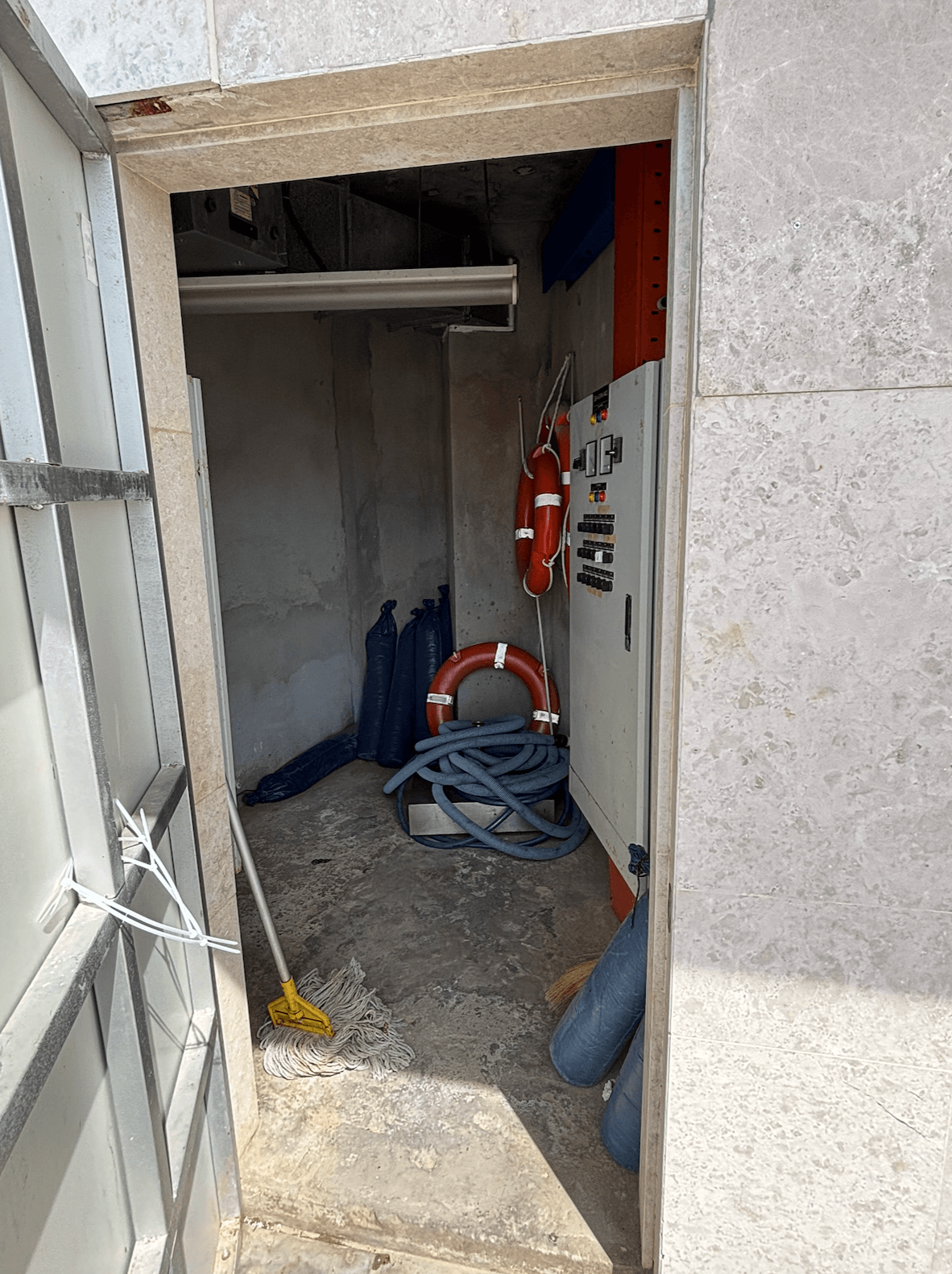
Life-saving equipment should be visible, accessible and ready for immediate use — not stored behind a locked door.
A hotel pool can look calm, inviting and beautifully presented. But safety is not measured by how peaceful the pool area appears. It is measured by what happens in the moment something goes wrong.
In one hotel, the critical life-saving equipment for the swimming pool was not positioned poolside. It was not clearly visible. It was not immediately available to Guests, staff or anyone who might need to respond quickly.
Instead, it was stored in a cupboard.
The cupboard was usually locked.
Access was only possible when cleaners happened to be using the same cupboard for mops and cleaning equipment.
There was no lifeguard on duty. There was no visible rescue equipment beside the pool. There was no obvious point of immediate response.
That creates a serious operational question.
If a Guest gets into difficulty in the water, who has access to the equipment, how quickly can they reach it, and would anyone even know where it is?
A life ring, reach pole, rescue hook or other emergency aid only has value if it can be reached immediately. In an emergency, the process cannot depend on finding a key, locating a cleaner, asking which cupboard is used, or hoping someone nearby knows the internal storage arrangement.
The poolside environment should be designed for the reality of an emergency, not the convenience of storage.
The issue is not simply where the equipment is kept
This is not just a facilities observation. It is a failure of safety thinking, Guest confidence and operational control.
A locked cupboard may make sense for stock control. It may make sense for chemical storage. It may make sense for cleaning supplies. It does not make sense for critical rescue equipment that may be needed without warning.
When a hotel has no lifeguard on duty, the importance of visible and accessible safety equipment becomes even greater. The absence of a lifeguard does not remove responsibility. It increases the need for clear controls, clear signage, trained staff and immediate access to emergency aids.
Safety standards, especially at large chain hotels, should not be country-specific. They should be universal across every property.
A Guest should not be protected differently because the hotel sits in a different market, jurisdiction or resort environment. Local regulations may vary, but a brand’s duty of care should not drop below the standard it would expect elsewhere in the world.
The Guest does not care which department owns the pool. They do not care whether the equipment sits under Housekeeping, Engineering, Recreation or Security. In the moment of need, the only question is whether the hotel was prepared.
Access cannot be dependent on chance
In this example, the only practical access to the cupboard appeared to be when cleaners were using it.
That means access to life-saving equipment was indirectly dependent on housekeeping activity.
That is not a control. It is chance.
What happens when cleaning has finished? What happens when the cupboard is locked again? What happens in the evening? What happens if the cleaner is on another floor, in another block or off duty? What happens if a Guest sees someone in distress but cannot identify where the rescue equipment is?
The issue becomes even more concerning when cleaning equipment and life-saving equipment are stored together. It suggests the equipment has been treated as a back-of-house item rather than a safety-critical poolside requirement.
Emergency equipment should not feel hidden. It should not feel incidental. It should not look like something that belongs in a storeroom.
It should be part of the pool safety environment.
What this tells the Guest
Guests may not consciously inspect every safety detail when they arrive at the pool. But they do notice absence.
They notice when no lifeguard is present. They notice when safety signage is unclear. They notice when there is no visible rescue equipment. They notice when staff are not actively monitoring the area. They notice when the pool feels unsupervised.
For parents, this matters even more. A family pool area without visible safety equipment can quickly change the emotional tone of the experience. What should feel relaxing begins to feel unmanaged.
That matters because safety is part of trust.
A hotel cannot position the pool as a key Guest Xperience asset and then fail to control the most basic emergency readiness around it.
The operational questions management should be asking
This type of observation should trigger more than a quick instruction to unlock the cupboard.
Management should ask whether rescue equipment is visible from the pool, whether it can be accessed immediately, whether it is checked before the pool opens, whether responsibility is clearly assigned, whether team members know what to do and whether signage is clear about the absence of a lifeguard.
They should also ask whether emergency contact information is displayed in the right place, whether there is a poolside phone or emergency call point, whether inspections are recorded and whether a first-time Guest would understand what to do without asking.
If the answer to any of these questions is unclear, the control is not strong enough.
The cupboard is a symptom
The locked cupboard is the visible issue, but it points to a deeper problem.
It suggests that safety equipment has been considered as an item to store, rather than a tool to use. It suggests the pool has been reviewed as an amenity, rather than as a live operational risk. It suggests departments may be maintaining their own routines without anyone standing back and viewing the full Guest journey.
That is where risk grows.
The pool may be clean. The deck chairs may be aligned. The towels may be folded. The water may look appealing. But if a basic emergency response tool is locked away, the operation is not properly controlled.
Presentation cannot compensate for poor safety readiness.
What good should look like
A well-managed pool environment should make emergency readiness visible without making the area feel alarming.
Life-saving equipment should be positioned poolside, easy to identify and immediately accessible. Signage should clearly explain whether a lifeguard is on duty or not. Staff should know the emergency process. Checks should be recorded. Equipment should be inspected. Access should never depend on a locked storage area or the availability of a cleaner.
The goal is not to make the pool feel clinical.
The goal is to make it feel safe, considered and professionally managed.
Life-saving equipment cannot save a life if nobody can reach it.
The GUESTX View
A pool is both a Guest Xperience asset and a safety-critical facility. It should be reviewed through both lenses.
If there is no lifeguard on duty, emergency readiness becomes even more important, not less. Visible equipment, clear signage, trained staff and daily management checks are not optional details. They are part of the hotel’s duty to operate with care.
The locked cupboard is not just a storage issue.
It is a warning sign that the hotel has not looked at the pool through the eyes of a Guest in distress, a parent needing help, or a team member expected to respond quickly.
In hospitality, the most important standards are often the ones Guests hope never need to be tested.
But when they are needed, they must work immediately.
← Back to blog